




Gifted Hands: The Ben Carson Story
From a struggling student to a pioneering neurosurgeon, one boy's story of faith, grit, and gifted hands.
Ben Carson, Cecil Murphey
Rs. 2,690.00
Sri Lankan goods, delivered to your door
Join Join our WhatsApp channelQuiet the mental noise and reclaim your focus with practical, calming strategies.
In stock
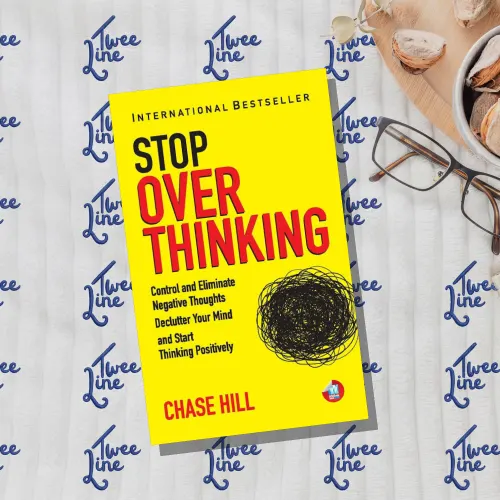
A practical self-help guide by Chase Hill (with Scott Sharp) offering actionable techniques to break the cycle of overthinking, reduce anxiety, and make clearer decisions.
Why read it
— Twee Line's take
Ask Tweeny about this book
If your mind races at night, replays conversations, or spins on decisions long after they matter, you are not alone. How to Stop Overthinking by Chase Hill, often co-authored with Scott Sharp, speaks directly to the quiet exhaustion of a busy mind. This is not a dense clinical textbook or a collection of vague affirmations. It is a practical, readable guide built for people who want to think less, decide faster, and feel calmer in daily life.
The book treats overthinking as a habit and a pattern, not a personal failure. That framing matters. When you stop blaming yourself for a busy mind, you can start working with your thoughts instead of fighting them. The authors focus on small, repeatable actions that interrupt rumination and help readers move from mental loops into clear next steps.
At its core, the book explores why the mind gets stuck and what keeps it there. It looks at common triggers such as uncertainty, perfectionism, fear of judgment, and the desire to control outcomes. From there, it introduces practical tools for noticing a thought spiral early, stepping out of it, and redirecting attention toward what you can actually influence.
Readers can expect guidance on:
The tone stays encouraging and direct. Chapters are designed to be read in short sittings, with ideas you can try the same day. That accessibility is part of the book's appeal: it meets readers where they are, whether they are new to self-help or returning to it after a stressful season.
Several themes run through the book. One is the idea that thoughts are events in the mind, not commands you must obey. Another is that clarity often comes from action, not from more thinking. The authors repeatedly return to the value of small experiments: try a technique, notice what changes, and keep what works.
The reading experience is calm and practical rather than dramatic. There are no miracle promises. Instead, the book builds confidence through manageable steps. Readers who appreciate straightforward language, short chapters, and exercises they can apply immediately will likely find it a good fit. It works well as a bedside book, a commute read, or a companion during a stressful period.
This book suits adults who feel mentally tired from constant analysis, students facing decision pressure, professionals navigating workplace uncertainty, and anyone who wants to worry less without dismissing real concerns. It can also be helpful for readers who have tried meditation or journaling and want more structured, thought-focused tools.
It is not a replacement for professional mental health care. Readers dealing with severe anxiety or depression should treat the book as a supplement to, not a substitute for, support from a qualified professional. The authors' approach is best understood as everyday mental fitness: practical habits for a busy mind.
Overthinking is common, quiet, and easy to normalize. A book that names the pattern and offers simple ways out can be genuinely useful. How to Stop Overthinking earns its place by being approachable, action-oriented, and respectful of the reader's time. It gives you language for what is happening in your head and a set of tools to respond differently.
If you want a self-help book that feels like a calm conversation with a practical friend, this is a strong choice. Keep it nearby for the nights when your mind will not settle, and revisit the exercises when life gets loud.
Chase Hill is a self-help author known for practical books on overthinking, anxiety, and mental habits. He often collaborates with Scott Sharp on accessible guides for everyday readers.
Total price: Rs. 6,275.00
From a struggling student to a pioneering neurosurgeon, one boy's story of faith, grit, and gifted hands.
Ben Carson, Cecil Murphey
Sharpen your mind and turn passive thoughts into purposeful action.
Ulf Löwenhav

A calm, practical guide to living with awareness, balance, and purpose.
Non-Fiction

Turn what sets you apart into the source of your confidence and success.
Kris Ferraro

A gentle guide to understanding and nurturing your child's emotional world.
Lauren Elizabeth Stauble, Alyssa Blask Campbell
A practical guide to turning intentions into action and results.
Darius Foroux
All 48 laws of power distilled into one sharp, fast-reading guide.
Robert Greene

Sharp, honest lessons on business and life from a founder who built and lost and built again.
Steven Bartlett

Unlock the secrets to becoming a memorable person.
Harsh Pamnani

Forward to the year 802,701, and then much further.
H.G. Wells
5.0 (1)


A gripping tale of rivalry and justice that keeps readers turning pages.
Agatha Christie
How to Stop Overthinking by Chase Hill
Rs. 1,630.00
Your cart is empty
Start adding items to see them here.