



The Law of Success
Hill’s original and fullest course in personal achievement.
Napoleon Hill
Rs. 2,860.00
Sri Lankan goods, delivered to your door
Join Join our WhatsApp channelThe classic mindset manual that turned desire into a practical plan for wealth and achievement.
In stock
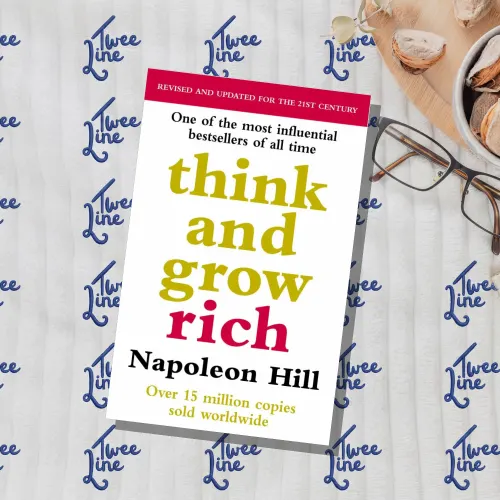
Napoleon Hill's landmark guide to success, offering thirteen principles for turning ambition into achievement through desire, faith, persistence, and planning.
Why read it
— Twee Line's take
Ask Tweeny about this book
Think and Grow Rich is one of the most widely read personal development books ever written. Napoleon Hill spent decades studying the habits, beliefs, and decisions of highly successful people, and distilled what he learned into a structured philosophy of achievement. The book is not a get-rich-quick manual. It is a study of how thought, belief, and persistent action combine to shape a person's circumstances. Readers who approach it as a practical workbook rather than a passive read tend to get the most from it.
The central argument is simple and demanding: what you consistently think about, believe in, and work toward tends to move closer to you. Hill frames this as a set of principles that can be studied, practiced, and repeated. The book's enduring appeal comes from that structure. It gives readers a framework, not just inspiration.
Hill begins with the idea that a burning desire is the starting point of all achievement. Wishing is not enough. The desire must be specific, written down, and paired with a clear plan and a deadline. From there, the book builds outward into faith, autosuggestion, specialized knowledge, imagination, organized planning, decision, persistence, the mastermind, transmutation, the subconscious mind, the brain, and finally the sixth sense. Each chapter adds a layer to the same basic process: define what you want, believe you can move toward it, learn what you need to learn, plan, act, and keep going when results are slow.
This structure is why the book has lasted. It reads less like a collection of motivational quotes and more like a curriculum. Readers can return to individual chapters when they are stuck on a specific problem, whether that is a lack of clarity, a fear of failure, or an inability to follow through.
The tone is direct, confident, and occasionally old-fashioned. Hill writes with the certainty of a teacher who believes he has found something important, and that conviction is part of the book's charm. Some passages feel dated, and some examples reflect the business world of an earlier era. Modern readers often find that the underlying ideas still apply, even when the illustrations do not.
The book works best when read slowly. Each chapter ends with practical prompts and self-assessment questions, and the value comes from answering them honestly rather than skimming. Many readers keep a notebook nearby and treat the book as a twelve-week or twelve-month program rather than a weekend read. Others read it once for the big picture and then revisit single chapters when they need a specific push.
It is also a book that rewards re-reading. The first pass often feels abstract. The second pass, after a reader has actually tried to apply one principle, feels much more concrete. That shift is a common experience among long-time readers.
Think and Grow Rich suits readers who want a structured approach to goal setting and personal achievement. It is a strong fit for entrepreneurs, students, sales professionals, creators, and anyone building a long-term project that requires sustained motivation. It also appeals to readers who enjoy classic self-development literature and want to understand where many modern productivity and mindset ideas originated.
Readers looking for a purely academic or data-driven treatment of success may find the book's style too anecdotal. Readers who want a short, modern, step-by-step system may prefer a contemporary adaptation. But for those willing to engage with the original, the book offers a durable mental framework that has influenced generations of readers.
Few books in the personal development space have had the staying power of Think and Grow Rich. Its ideas about desire, belief, planning, and persistence appear, in various forms, in countless later works. Reading the original gives context to those ideas and a chance to apply them without the layers of interpretation that have accumulated over the years.
It is also a practical book. The principles are simple enough to remember and flexible enough to apply to almost any goal, whether the aim is financial, professional, creative, or personal. That combination of simplicity and depth is rare.
Finally, the book is a useful companion over time. A reader can return to it at different stages of life and find that different chapters speak to the current situation. That is the mark of a book worth keeping within reach rather than reading once and shelving.
Approached this way, Think and Grow Rich becomes less a book to finish and more a system to use. Its promise is not instant wealth but a clearer, more disciplined way of pursuing what matters to the reader.
Napoleon Hill (1883-1970) was an American self-help author and journalist. He is best known for his book Think and Grow Rich, which is one of the best-selling books of all time. Hill's work was inspired by a commission from industrialist Andrew Carnegie to study the habits of successful people.
Hill’s original and fullest course in personal achievement.
Napoleon Hill
Hill’s thirteen principles, drawn from twenty years of interviews.
Napoleon Hill
The timeless classic on achieving wealth and success through positive thinking.
Napoleon Hill
A practical paperback pick for readers drawn to personal growth and useful action in Think and Grow Rich (Vermilion).
Napoleon Hill
A practical paperback pick for readers drawn to a clear and readable approach to its subject in Notes from Underground & the Double.
Fyodor Dostoevsky
A practical paperback pick for readers drawn to a clear and readable approach to its subject in The Idiot.
Fyodor Dostoevsky
A practical paperback pick for readers drawn to a clear and readable approach to its subject in Demons.
Fyodor Dostoevsky
A practical paperback pick for readers drawn to a clear and readable approach to its subject in The House of the Dead.
Fyodor Dostoevsky
A practical paperback pick for readers drawn to a clear and readable approach to its subject in Crime And Punishment (Fingerprint).
Fyodor Dostoevsky
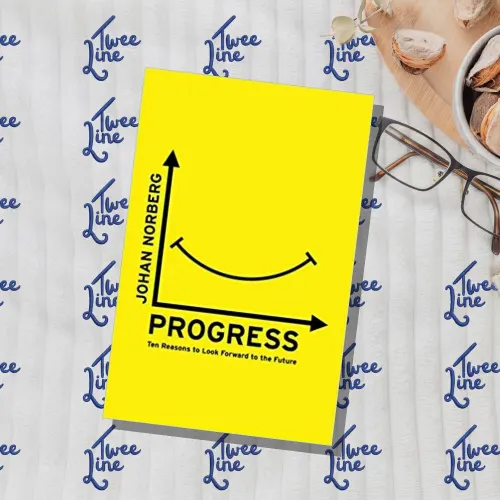
A practical paperback pick for readers drawn to personal growth and useful action in Progress: Ten Reasons to Look Forward to the Future.
Johan Norberg

A practical paperback pick for readers drawn to a clear and readable approach to its subject in Restore Me.
Tahereh Mafi
Think and Grow Rich (Jaico)
Rs. 1,040.00
Your cart is empty
Start adding items to see them here.