




The Miss Marple Collection (Set of Books : Agatha Christie)
Settle in with Miss Marple and a stack of classic mysteries.
Agatha Christie
Rs. 9,290.00
Sri Lankan goods, delivered to your door
Join Join our WhatsApp channelA frightened young woman, a missing memory, and Poirot's most puzzling case of identity.
In stock
In Third Girl, Hercule Poirot is approached by a nervous young woman who believes she may have committed a murder but cannot remember. As he investigates her shared flat and tangled past, Poirot must untangle deception, identity, and a killer hiding in plain sight.
Why read it
— Twee Line's take
Ask Tweeny about this book
Third Girl opens with one of the most disarming premises in the Poirot canon: a young woman named Norma Restarick arrives at Hercule Poirot's door and tells him she thinks she may have killed someone. She cannot say who, she cannot say when, and she cannot even be certain the crime happened at all. She only knows that something is wrong with her memory, that she feels detached from her own life, and that she needs help from someone who understands the darker corners of human behavior. Poirot, intrigued and unsettled, takes the case, and what follows is a slow, meticulous descent into a household where nothing is quite what it seems.
This is not a story of a locked room or a country house weekend. It is a story about identity, about the stories people tell themselves to survive, and about the dangerous space between what a person remembers and what actually happened. Agatha Christie uses the premise to explore the fragility of the self, and she does it with the quiet precision that made Poirot one of the most enduring detectives in fiction.
Norma lives in a shared flat in London with two other young women, and the arrangement is immediately suspect. The flat is a pressure cooker of personalities, secrets, and small cruelties. Christie draws the living situation with a sharp eye for the way young people negotiate space, money, and trust, and the result is a setting that feels both intimate and claustrophobic. The flat is not simply a backdrop; it is a machine for generating suspicion, and every conversation inside it carries a second layer of meaning.
Beyond the flat, the novel moves through the world of Norma's family: her wealthy father, her stepmother, and the employees and hangers-on who orbit the family business. Christie is particularly interested in the generational divide here. Norma belongs to a younger generation that the older characters find baffling, and the novel uses that gap to create genuine unease. The adults in the story are quick to dismiss Norma as dramatic or unstable, and the reader is left to wonder whether that dismissal is ordinary condescension or something more calculated.
Fans of Poirot know that the detective's methods are not built on chases or gunplay. They are built on order, observation, and the relentless arrangement of small facts until a pattern emerges. Third Girl gives Poirot plenty of small facts to arrange. There are inconsistencies in timelines, oddities in behavior, and a cast of characters who each seem to be withholding something. Poirot's genius here is not in a single dramatic deduction but in his willingness to sit with ambiguity, to ask the same question in different ways, and to notice when a person's story does not fit the shape of their life.
Christie also gives Poirot a partner in the investigation: Ariadne Oliver, the mystery novelist who appears in several of the later Poirot books. Mrs. Oliver is a delightful presence, a writer who is both shrewd and easily flustered, and her friendship with Poirot provides some of the novel's warmest and funniest moments. She is also useful to the plot, because her instincts about people, however unpolished, often point Poirot toward questions he might not have asked. The partnership keeps the novel from becoming too airless, and it gives readers a character to root for alongside the detective.
The central theme of Third Girl is the unreliability of memory, but Christie is after something more specific than simple forgetfulness. Norma's uncertainty about her own actions raises a deeper question: if you cannot trust your own mind, who are you? The novel explores how identity is constructed from memory, from the accounts of other people, and from the roles we are assigned by family and society. Norma is treated by those around her as a certain kind of person, and the novel asks whether that treatment is a description or a trap.
Christie also examines the way people use other people's uncertainty against them. Gaslighting, though the term is never used, is a presence in the book. Characters are told they are imagining things, that they are overwrought, that they should not trust their own perceptions. The novel is alert to the power dynamics in those moments, and it shows how easily a person can be made to doubt themselves when the people around them are confident and dismissive. For modern readers, this aspect of the book may feel especially resonant.
Another theme is the gap between appearance and reality in family life. The Restarick family presents itself as respectable and stable, but the novel peels back that presentation layer by layer. Christie is not cynical about family, but she is clear-eyed about the ways families can become systems of control. The book asks what loyalty means when the people you are loyal to are not being honest with you, and it does not offer easy answers.
Third Girl is a late Poirot novel, and it has the reflective, slightly autumnal quality that marks Christie's later work. The pace is deliberate rather than breakneck, and the pleasure comes from watching Poirot work rather than from action set pieces. The prose is clean and efficient, with flashes of dry humor, especially in the scenes involving Mrs. Oliver. The dialogue is sharp, and Christie has a good ear for the way people talk when they are trying to manage someone else's impression of them.
The novel is also genuinely unsettling in places. Norma's disorientation is rendered with care, and the reader shares some of her uncertainty. Christie does not cheat on the mystery, but she does make the reader work to distinguish between what is strange and what is sinister. The result is a book that rewards attention and rereading, because the clues are there from the beginning, waiting to be seen in a new light.
Third Girl is a strong choice for readers who love character-driven mysteries, for fans of Poirot who want to see him in a more psychological mode, and for anyone interested in the way classic crime fiction handles questions of memory and identity. It is not the most famous Poirot novel, which is part of its appeal; it offers the pleasure of discovering a lesser-known case that still delivers the satisfactions of Christie's best work. The book is also a useful entry point for readers who are curious about the later Poirot stories and the partnership with Ariadne Oliver.
For a bookseller or a reader building a mystery collection, Third Girl sits comfortably alongside Christie's other London-set Poirot novels. It is a book about a young woman who cannot trust herself, and a detective who trusts his own method even when the evidence is slippery. That combination makes it a memorable and rewarding read, and it is a fine example of why Christie's work continues to find new readers.
Agatha Christie was a prolific British author known for her detective novels, short stories, and plays. She is best remembered for creating iconic characters like Hercule Poirot and Miss Marple, and her works include classics such as 'Murder on the Orient Express' and 'And Then There Were None.' Often called the Queen of Crime, she is one of the best-selling authors of all time.
Settle in with Miss Marple and a stack of classic mysteries.
Agatha Christie
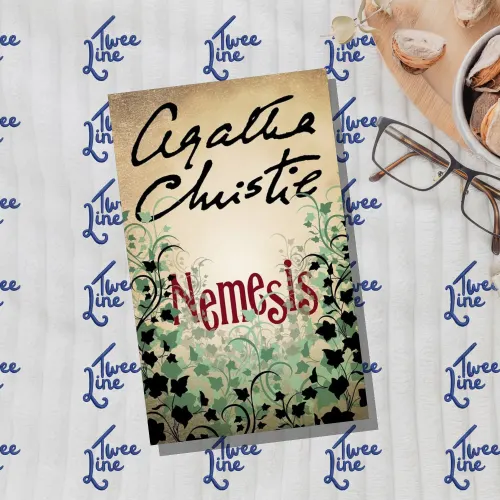
A gripping tale of rivalry and justice that keeps readers turning pages.
Agatha Christie
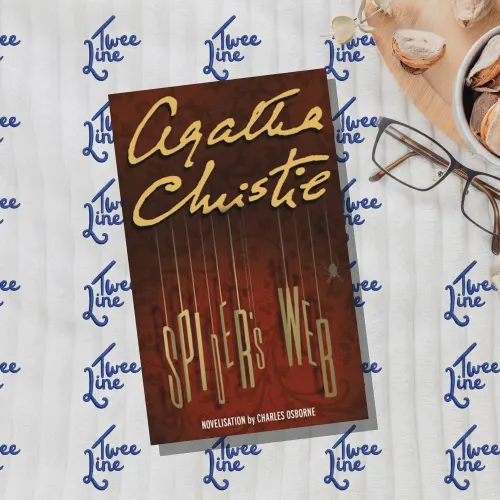
A classic Agatha Christie mystery of secrets, suspicion, and a body that vanishes.
Agatha Christie

A young woman stumbles into a deadly spy conspiracy in Agatha Christie's Baghdad thriller.
Agatha Christie

A haunting Jennifer Niven novel about friendship, secrets, and the monsters we hide.
Jennifer Niven

Persephone's mortal life unravels as her bond with Hades is tested in this steamy Greek myth retelling.
Scarlett St. Clair

The explosive second book in Tahereh Mafi's Shatter Me: Series Two, where love and power collide.
Tahereh Mafi

A warm return to the Torunka Cafe, where small moments and quiet conversations feel like home.
Satoshi Yagisawa

A gripping tale of time travel and second chances.
Katherine Allred
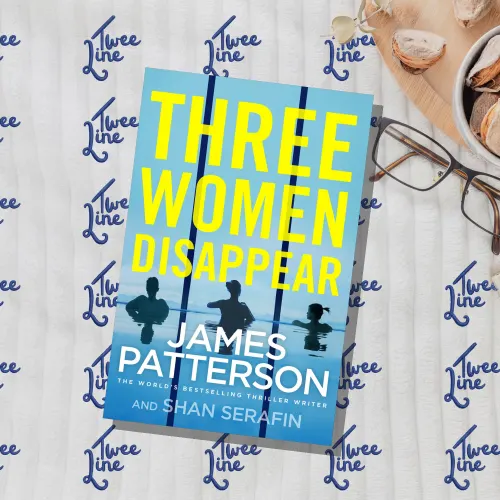
A practical paperback pick for readers drawn to a clear and readable approach to its subject in Three Women Disappear.
James Patterson, Shan Serafin

The timeless classic on achieving wealth and success through positive thinking.
Napoleon Hill

A practical paperback pick for readers drawn to real-world ideas, context, and perspective in How to Spot a Fascist.
Umberto Eco
Poirot: Third Girl
Rs. 2,160.00
Your cart is empty
Start adding items to see them here.